Otaru: A Timeless Enchantment Where History Meets Modern Delights

Jun 9, 2025 By

The charming port city of Otaru, nestled along the western coast of Hokkaido, Japan, is a destination that effortlessly blends history, culture, and natural beauty. Known for its well-preserved canal area, historic warehouses, and thriving glass-blowing industry, Otaru offers visitors a glimpse into Japan's Meiji and Taisho eras while providing modern-day delights. The city's unique atmosphere, shaped by its maritime heritage and artistic flair, makes it a must-visit for travelers seeking something beyond the usual tourist trails.


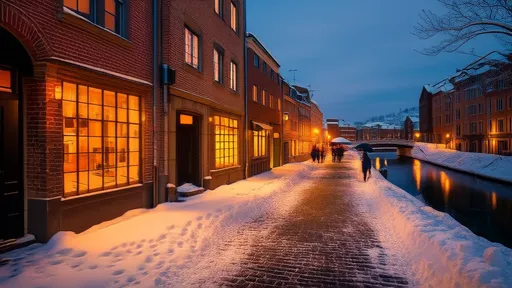
Walking through Otaru feels like stepping into a bygone era. The city rose to prominence in the late 19th century as Hokkaido's main port for herring fishing and trade. This prosperous period left behind an architectural legacy that still defines Otaru's character today. The most iconic landmark is undoubtedly the Otaru Canal, completed in 1923. Lined with vintage gas lamps and weathered brick warehouses, the canal area becomes particularly magical at dusk when the lights reflect off the water's surface. Many of these old warehouses have been converted into museums, cafes, and shops, creating a harmonious blend of preservation and reinvention.


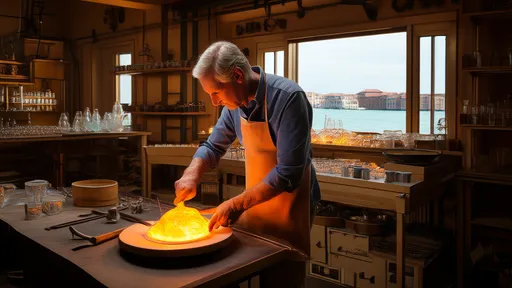
The glassworks studios of Otaru represent another facet of the city's identity. Glass manufacturing became prominent here during the early 20th century when local fishermen needed glass floats for their nets. Today, numerous studios continue this tradition, producing exquisite glass art ranging from delicate ornaments to elaborate tableware. The Kitaichi Glass Sangokan, housed in a renovated warehouse, stands out as a premier destination where visitors can watch artisans at work and browse through glittering showrooms filled with handcrafted pieces. The adjacent Kitaichi Hall, with its stunning Venetian glass chandeliers, adds to the enchanting atmosphere.


Otaru's culinary scene offers another compelling reason to visit. As a coastal city, it boasts exceptionally fresh seafood, particularly sushi and sea urchin. The Sankaku Market, though small compared to Sapporo's famous fish markets, provides an authentic experience where visitors can select their seafood and have it prepared on the spot. Beyond seafood, Otaru takes pride in its dairy products, benefiting from Hokkaido's rich pastures. Local cream puffs and soft-serve ice cream have gained cult followings among Japanese food enthusiasts. The city's sake breweries, some dating back over a century, continue to produce premium rice wine using pure underground water from the nearby mountains.


Music boxes represent yet another of Otaru's unexpected specialties. The Otaru Music Box Museum, located in a charming wooden building, houses thousands of intricate music boxes ranging from antique pieces to contemporary designs. The main branch's massive steam clock, which chimes every fifteen minutes, has become a beloved symbol of the city. Nearby, the former Mitsui Bank building, with its stunning stained glass dome, stands as a testament to Otaru's former wealth during its banking heyday in the early 20th century.


Seasonal changes dramatically alter Otaru's character throughout the year. Winter transforms the city into a snow-globe scene, with the Otaru Snow Light Path Festival illuminating the streets with countless delicate snow lanterns. Spring brings cherry blossoms along the canal and in Temiya Park, while summer offers pleasant temperatures perfect for strolling and enjoying the sea breeze. Autumn paints the surrounding mountains in vibrant hues, creating a spectacular backdrop for the city. Each season offers distinct festivals and events that showcase different aspects of Otaru's culture and community spirit.


Beyond the main tourist areas, Otaru rewards those willing to explore further. The Temiya Line, a former railway route converted into a walking path, provides scenic views of the ocean and passes through quiet neighborhoods. The Nishin Goten (Herring Mansion) offers insight into the lavish lifestyles of successful herring fishermen during the industry's peak. For panoramic views, a hike up Mount Tengu delivers breathtaking vistas of the city and Ishikari Bay, especially memorable at sunset. These less-visited spots reveal a more intimate side of Otaru away from the crowds.


The city's accommodation options range from luxurious hotels housed in historic buildings to cozy family-run ryokans. Many establishments incorporate elements of Otaru's heritage into their design, featuring exposed brick walls, wooden beams, or glass art installations. Staying overnight allows visitors to experience the city's tranquil mornings when the streets are quiet and the morning light bathes the canal in soft hues. This peaceful interlude provides a different perspective before the day's activities begin.


Otaru's accessibility adds to its appeal. Located just 30 minutes by train from Sapporo, it makes for an easy day trip yet warrants a longer stay to fully appreciate its offerings. The journey itself along the coast presents lovely sea views, especially when traveling on the old-fashioned Romance Car trains. This proximity to Hokkaido's capital while maintaining its distinct identity allows Otaru to offer the best of both worlds - small-town charm with convenient access to urban amenities when needed.


What truly sets Otaru apart is its ability to preserve its history without becoming stagnant. The city continues to evolve, with new cafes, galleries, and boutiques opening in historic spaces, ensuring relevance for contemporary visitors while honoring the past. This delicate balance between tradition and innovation creates a dynamic atmosphere where every visit can uncover new discoveries. Whether it's stumbling upon a hidden glass studio, finding the perfect music box, or simply enjoying a leisurely walk along the canal, Otaru leaves visitors with lasting memories of its understated elegance and warm hospitality.



Recommend Posts
Travel

The Mathematical Code of Persian Carpet: The Cosmological View in the Geometric Patterns of the Isfahan School

By /Jun 10, 2025

In the labyrinthine alleys of Isfahan's Grand Bazaar, where the scent of saffron mingles with the whisper of silk, Persian carpet weavers have been encoding cosmic truths into wool and dye for centuries. The geometric patterns adorning Isfahan school masterpieces—often dismissed as mere decoration—conceal a sophisticated mathematical language that bridges medieval Islamic cosmology with cutting-edge mathematics. Recent interdisciplinary studies reveal how these intricate designs function as fractal equations, articulating philosophical concepts about infinity long before Western mathematicians formalized such ideas.
Travel

The Transformation of Craftsmen in Venice's Glass Island: Murano Family's Centennial Strategy for Coping with Chinese Manufacturing

By /Jun 10, 2025

On the Venetian island of Murano, where glassmaking has been a centuries-old tradition, the descendants of master artisans are facing an unprecedented challenge. The rise of Chinese manufacturing has disrupted global markets, flooding them with inexpensive glass products that threaten the survival of Murano's delicate artisanal economy. For generations, families like the Morettis and the Baroviers have passed down secret techniques, but now they must adapt or risk fading into obscurity.
Travel

Dubai’s Camel Racing Revolution: Tradition Collides with AI Ethics

By /Jun 10, 2025

The sun rises over the golden dunes of Dubai, casting long shadows across the Al Marmoom racetrack. For centuries, camel racing has been a cornerstone of Bedouin culture, a sport steeped in tradition and pride. But in recent years, a quiet revolution has taken hold—one driven not by human hands, but by robotics and artificial intelligence. The once-familiar sight of child jockeys has been replaced by tiny, whirring machines strapped to the camels’ backs. While this shift has brought undeniable advancements in safety and efficiency, it has also sparked a heated debate over ethics, tradition, and the role of technology in shaping the future of this ancient sport.
Travel

Amazon Tribe's Drone Protest: How Indigenous Peoples Use Technology to Defend Rainforest Sovereignty

By /Jun 10, 2025

Deep in the heart of the Amazon rainforest, where the emerald canopy stretches endlessly and rivers carve ancient paths through the land, a quiet revolution is unfolding. Indigenous tribes, long portrayed as disconnected from modernity, are now harnessing cutting-edge technology to defend their ancestral territories. Drones buzz overhead, capturing footage of illegal logging and land invasions, while smartphones document environmental crimes in real-time. This is not a scene from a dystopian novel—it’s the new frontline of Indigenous resistance.
Travel

The Disappearance History of the Himalayan Salt Merchant Trail: When Rock Salt Trade Meets Global Supply Chain

By /Jun 10, 2025

The ancient Himalayan salt trade routes, once pulsating with caravans carrying pink gold to distant kingdoms, now whisper only in the fragmented memories of mountain elders. These high-altitude trails—where yak hooves carved paths through vertiginous cliffs and Buddhist prayer flags fluttered above salt-laden porters—have surrendered to the relentless march of globalized supply chains. What was once a sacred commodity traded for Tibetan turquoise and Nepalese musk now sits commodified on supermarket shelves, its mystical aura diluted by industrial extraction and container ships.
Travel

The Renaissance Movement of the Nile Flood Festival: Modern Egyptians' Worship of Hydrology and Climate Change Response

By /Jun 10, 2025

The Nile River, the lifeblood of Egypt for millennia, has long been a source of both sustenance and spiritual significance. In recent years, a movement to revive the ancient Festival of the Nile Inundation has gained momentum among modern Egyptians. This resurgence is not merely a nostalgic nod to the past but a complex interplay of cultural identity, environmental awareness, and a pragmatic response to the growing threats posed by climate change.
Travel

The Icelandic Volcanic Hot Springs Paradox: How Geothermal Energy Reshaps Nordic Welfare Society

By /Jun 10, 2025

The steaming geothermal lagoons of Iceland have long captivated travelers, but beneath their ethereal beauty lies an unexpected economic paradox. While most nations associate energy independence with geopolitical leverage or industrial might, Iceland’s volcanic abundance has quietly rewired the very fabric of its welfare state. This remote island, where glaciers coexist with erupting fissures, demonstrates how renewable energy can transcend environmental benefits to become the bedrock of social equity.
Travel

The Ancient Craft of Moroccan Tanneries: Camel Urine’s Ecological Wisdom in Tanning Techniques

By /Jun 10, 2025

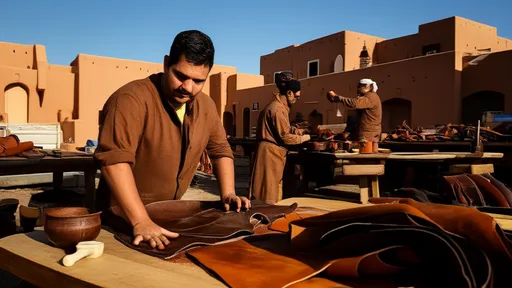
In the labyrinthine alleys of Fez, Morocco, the air carries a pungent yet strangely familiar scent—a blend of animal hides, natural dyes, and an unexpected ingredient: camel urine. For over a thousand years, the tanneries of Fez have practiced a leather-making tradition that is as much about sustainability as it is about craftsmanship. This ancient method, passed down through generations, reveals an ecological wisdom that modern industries are only beginning to appreciate.
Travel

The 'Jian' Aesthetics of Japanese Noh Opera Masks: Dynamic Solidification Art from the Perspective of Zen Thought

By /Jun 10, 2025

The enigmatic beauty of Japanese Noh theater masks lies not merely in their carved wooden surfaces, but in the profound philosophical interplay between movement and stillness. These masks, known as omote, embody what scholars call the aesthetics of ma (間)—a concept deeply rooted in Zen Buddhism that explores the charged emptiness between forms. To witness a Noh performance is to observe how a static object breathes life into a dynamic art form, creating a paradoxical tension where time itself seems to suspend.
Travel

The Cosmological View of Mexican Day of the Dead: A Life and Death Dialogue between Aztec Calendar and Catholic Culture

By /Jun 10, 2025

The Mexican Day of the Dead, or Día de los Muertos, is a vibrant and profound celebration that transcends mere festivity. At its core lies a rich cosmological dialogue between the ancient Aztec understanding of life and death and the Catholic traditions brought by Spanish colonizers. This unique fusion has given birth to a ritual that is both deeply spiritual and joyously communal, reflecting a worldview where the boundaries between the living and the dead blur, if only for a brief moment each year.
Travel

The Star Chart Memory of Sahara Nomads: How Berbers navigated the galaxy

By /Jun 10, 2025

The vast expanse of the Sahara Desert, with its shifting dunes and relentless sun, has long been a formidable challenge for travelers. Yet, for centuries, the nomadic Berber people have traversed this unforgiving landscape with remarkable precision, guided not by compasses or maps, but by the stars. Their intricate knowledge of the night sky, passed down through generations, reveals a celestial navigation system as sophisticated as it is ancient.
Travel

The Generative Inheritance of Venetian Gondola Boatmen: Guardians of the Living Heritage of the Water Silk Road

By /Jun 10, 2025

In the labyrinthine canals of Venice, where the Adriatic whispers against ancient stone, the gondoliers ply their trade with a rhythm unchanged by centuries. These custodians of the waterways are more than mere ferrymen; they are the living heirs of a maritime tradition that once connected Europe to the silk and spice routes of the East. Their gondolas—black, sleek, and asymmetrical—cut through the water like needles stitching together the past and present of a city built on trade, myth, and salt.
Travel

The 'Khmer Smile' of Angkor Wat: How Giant Stone Buildings Carry the Millennium Code of Faith

By /Jun 10, 2025

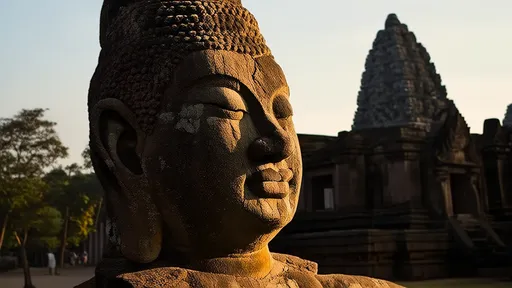
The enigmatic smiles of the Bayon temple’s stone faces have watched over Cambodia’s Angkor Archaeological Park for nearly a millennium. Known as the "Khmer Smile," these serene visages carved into towering sandstone structures are more than just artistic marvels—they are silent witnesses to a civilization’s spiritual and architectural genius. Angkor, once the heart of the Khmer Empire, remains one of humanity’s most profound archaeological treasures, where every chisel mark on its weathered stones whispers secrets of faith, power, and cosmic harmony.
Travel

Discovering Da Nang: Vietnam's Coastal Gem

By /Jun 9, 2025

Nestled along the central coast of Vietnam, Da Nang has emerged as one of the country's most captivating destinations. With its golden beaches, lush mountains, and rich cultural heritage, this city offers a unique blend of natural beauty and urban sophistication. Unlike the more tourist-heavy hubs of Hanoi or Ho Chi Minh City, Da Nang retains a laid-back charm while still providing world-class amenities and attractions.
Travel

Nuremberg: A City of History, Culture, and Resilience

By /Jun 9, 2025

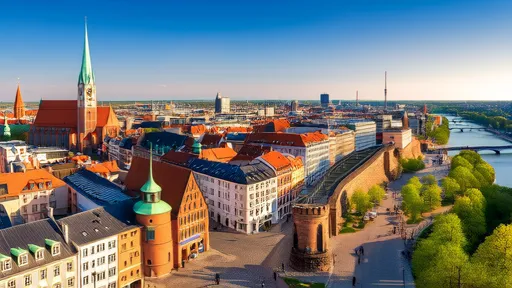
Nestled in the heart of Bavaria, Nuremberg stands as a testament to Germany’s rich and complex history. Known for its medieval architecture, pivotal role in the Holy Roman Empire, and the infamous post-World War II trials, the city is a fascinating blend of old-world charm and modern vitality. Walking through its cobblestone streets, one can’t help but feel the weight of centuries past, yet also the vibrant pulse of contemporary life.
Travel

Rovaniemi: The Arctic Gateway Where Magic Meets Wilderness

By /Jun 9, 2025

Nestled just south of the Arctic Circle, Rovaniemi is a place where fairy tales and rugged nature collide. As the official hometown of Santa Claus and the capital of Finnish Lapland, this city wears many hats—part winter wonderland, part gateway to untamed wilderness. Visitors often arrive expecting kitsch but leave with a profound appreciation for a destination that balances tourism with authenticity.
Travel

Otaru: A Timeless Enchantment Where History Meets Modern Delights

By /Jun 9, 2025

The charming port city of Otaru, nestled along the western coast of Hokkaido, Japan, is a destination that effortlessly blends history, culture, and natural beauty. Known for its well-preserved canal area, historic warehouses, and thriving glass-blowing industry, Otaru offers visitors a glimpse into Japan's Meiji and Taisho eras while providing modern-day delights. The city's unique atmosphere, shaped by its maritime heritage and artistic flair, makes it a must-visit for travelers seeking something beyond the usual tourist trails.
Travel

Bergen: Where History, Culture, and Nature Dance Together in Western Norway

By /Jun 9, 2025

Nestled between seven mountains and the fjords of western Norway, Bergen stands as a city where history, culture, and nature intertwine seamlessly. Known as the gateway to the fjords, this UNESCO-listed city has long been a hub for trade, art, and maritime adventures. Its colorful wooden houses, cobblestone streets, and vibrant waterfront create a postcard-perfect setting that feels both timeless and alive.
Travel

Prague: The Timeless Heart of Europe

By /Jun 9, 2025

Nestled along the winding Vltava River, Prague stands as one of Europe’s most enchanting cities. Its skyline, dotted with Gothic spires and Baroque domes, tells a story of centuries past while its vibrant streets pulse with modern energy. Unlike many European capitals that have been reshaped by war or rapid modernization, Prague retains an almost untouched medieval charm, earning it the nickname "the City of a Hundred Spires." Visitors often find themselves lost in its labyrinth of cobblestone alleys, where every corner reveals a new architectural marvel or a hidden café steeped in history.
Travel

Colmar: A Timeless Enchantment Where History, Culture, and Beauty Converge

By /Jun 9, 2025

Nestled in the heart of Alsace, France, the picturesque town of Colmar stands as a living testament to medieval charm and vibrant cultural heritage. With its half-timbered houses, winding canals, and flower-lined streets, Colmar feels like a scene lifted straight from a fairy tale. The town’s unique blend of French and German influences is evident in its architecture, cuisine, and traditions, making it a fascinating destination for travelers seeking both beauty and history.