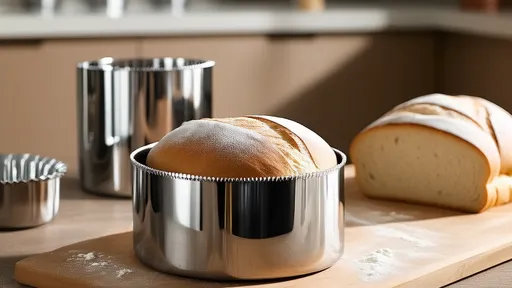
The art of baking bread is as much a science as it is a craft, and nowhere is this more evident than in the use of adjustable ring molds. These versatile tools allow bakers to control the expansion of dough during proofing and baking, but mastering their use requires a deep understanding of how bread behaves at different stages. The relationship between dough expansion and the optimal timing for demolding is a delicate balance that separates good loaves from great ones.
At the heart of this process lies the interplay between yeast activity, gluten development, and mold constraints. As dough ferments, carbon dioxide production causes it to expand against the confines of the ring mold. Bakers must develop an intuitive sense for when the dough has reached its ideal volume before baking - too little expansion results in dense bread, while overproofing can lead to collapse. The adjustable nature of these molds adds another layer of complexity, as the diameter setting directly impacts how the dough can grow.
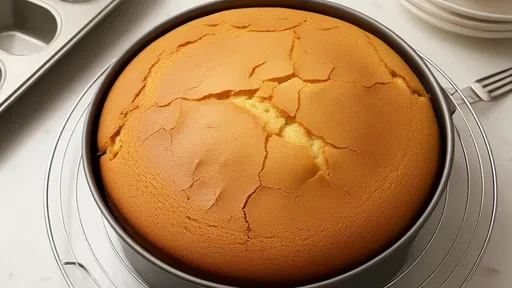
The visual cues of properly expanding dough tell a story that experienced bakers learn to read like a book. A healthy dough will show smooth, even expansion with slight doming at the top. The surface should appear taut but not stretched thin, with visible bubbles just beneath the skin. When using clear-sided ring molds, observers can watch the fascinating ballet of bubbles migrating and merging as fermentation progresses. These visual indicators become crucial markers for determining when the dough has reached its peak before baking.
Temperature plays a pivotal role in determining expansion rates and therefore demolding timing. In warmer environments, dough may race through its fermentation stages, requiring earlier demolding to prevent overproofing. Conversely, cooler conditions slow yeast activity, potentially necessitating extended proofing times. The adjustable ring mold becomes an invaluable tool in these situations, allowing bakers to compensate for environmental variables by controlling the physical constraints on the dough's growth.
Hydration levels in the dough recipe dramatically affect how bakers should approach demolding decisions. High-hydration doughs tend to be more extensible but less elastic, often requiring support from the mold for longer periods. These wetter doughs may need to be baked while still constrained by the ring to maintain their shape. Lower hydration doughs, with their greater structural integrity, can often be demolded earlier in the process. The adjustability of ring molds allows bakers to fine-tune the support based on each recipe's specific needs.
The moment of demolding represents a critical transition point where the dough must support its own structure. Timing this perfectly requires understanding how much oven spring to expect during baking. Dough that appears perfectly proofed in the mold may overexpand when released, while dough that seems slightly underproofed might reach perfection with the additional rise in the oven's heat. This judgment call separates novice bakers from masters, and it's where the adjustable ring mold shows its true value - allowing for gradual adjustments to find that sweet spot for each unique batch.
Flour type and quality introduce another layer of variables affecting expansion and demolding decisions. Strong bread flours with high protein content develop more gluten structure, generally allowing for greater expansion and more flexibility in demolding timing. Whole grain flours, while nutritious, typically result in less dramatic oven spring and may require different mold adjustments. The observant baker learns to modify their approach based on these subtle but important differences in ingredients.
The sound of baking bread offers unexpected clues about expansion and doneness that complement visual observations. As the loaf approaches proper expansion in the oven, the escaping steam creates distinct crackling sounds. Experienced bakers often listen as much as they look when determining the perfect moment to remove molds or make final baking adjustments. This multi-sensory approach to judging bread expansion represents the height of the baker's art.
Commercial baking operations face particular challenges in scaling these principles for production. The adjustable ring mold becomes indispensable for maintaining consistency across batches while accommodating natural variations in ingredients and conditions. Precise documentation of mold settings, expansion measurements, and demolding times allows bakeries to create reproducible results while still leaving room for the baker's intuition and experience.
Modern technology has introduced new tools for monitoring dough expansion, from laser measurement devices to digital imaging systems. However, the fundamental relationship between the baker's senses, the adjustable mold, and the living dough remains unchanged. These technological aids serve to enhance rather than replace the baker's traditional skills, providing data to inform but not override the human judgment that lies at the heart of great bread making.
The journey from mixer to finished loaf involves countless subtle decisions, but few are as consequential as determining the precise moment to release dough from its mold. This decision, informed by careful observation of expansion patterns and guided by experience with adjustable constraints, ultimately determines whether the baker delivers merely adequate bread or something truly extraordinary. The adjustable ring mold, in skilled hands, becomes not just a tool but an extension of the baker's own senses and intuition.
By /Jun 19, 2025
By /Jun 19, 2025
By /Jun 19, 2025

By /Jun 19, 2025
By /Jun 19, 2025

By /Jun 19, 2025
By /Jun 19, 2025

By /Jun 19, 2025

By /Jun 19, 2025

By /Jun 19, 2025

By /Jun 19, 2025

By /Jun 19, 2025
By /Jun 19, 2025
By /Jun 19, 2025

By /Jun 19, 2025
By /Jun 19, 2025

By /Jun 18, 2025
By /Jun 18, 2025

By /Jun 18, 2025
By /Jun 18, 2025
