In the heart of Argentine cuisine, few condiments carry the cultural weight and vibrant flavor of chimichurri. This emerald-green sauce, often drizzled over grilled meats, is a symphony of fresh parsley, pungent garlic, and tangy red wine vinegar. But what separates an ordinary chimichurri from an extraordinary one lies in the ancient technique of hand-chopping and emulsification—a ritual that transforms humble ingredients into something transcendent.
The foundation of authentic chimichurri begins with the selection of ingredients. Flat-leaf parsley, known locally as perejil, is preferred for its robust flavor and tender stems. Unlike the curly variety, which can be bitter and fibrous, flat-leaf parsley blends seamlessly into the sauce. Garlic, another cornerstone, must be fresh and finely minced to release its aromatic oils. Argentine cooks often insist on using a wooden mortar and pestle or a mezzaluna knife to crush the garlic, as metal blades can oxidize the cloves, imparting a harsh taste.
Red wine vinegar is the acidic backbone of chimichurri, but not all vinegars are created equal. Artisanal producers in Argentina favor aged red wine vinegar for its mellow acidity and subtle oak undertones. When combined with extra-virgin olive oil, the vinegar undergoes a slow emulsification process—one that demands patience. The key is to drizzle the oil gradually while continuously chopping the herbs, allowing the mixture to thicken naturally. This method, though labor-intensive, prevents the sauce from separating and creates a velvety texture that clings to food.
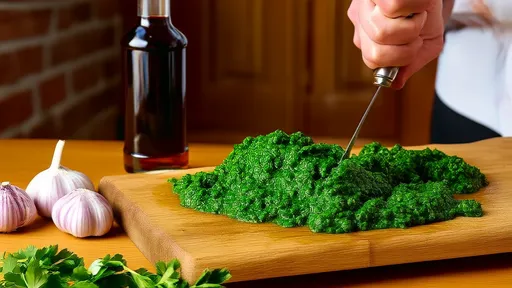
The act of hand-chopping—picado a cuchillo—is where the magic happens. Unlike blitzing ingredients in a food processor, which can turn herbs into a pulpy mess, the rhythmic motion of a knife preserves the integrity of each component. The parsley should be chopped just enough to release its chlorophyll-rich juices but retain some texture. Garlic, too, benefits from this approach; uneven mincing ensures bursts of flavor in every bite. This tactile process connects the cook to generations of Argentine gauchos who prepared chimichurri with nothing more than a pocketknife and a wooden bowl.
Temperature plays a surprising role in chimichurri’s emulsification. Many novice cooks make the mistake of using cold ingredients, which resist blending. Instead, the parsley and garlic should be at room temperature, and the olive oil slightly warmed—not hot enough to cook the herbs, but enough to encourage cohesion. Some traditional recipes even call for a splash of warm water to jumpstart the emulsification, a trick passed down through families in the Pampas region.
The final texture of chimichurri is a matter of personal preference. Purists argue it should resemble a loose pesto, with visible flecks of herbs suspended in the emulsion. Others prefer a smoother consistency, achieved by prolonged chopping. Regardless of style, the sauce must rest for at least an hour before serving. This waiting period allows the flavors to marry and the garlic’s sharpness to mellow. In Argentina, it’s said that chimichurri tastes best when it has "slept" overnight, awakening with deeper, more harmonious notes.
Beyond its technical aspects, chimichurri embodies Argentina’s culinary philosophy: respect for raw materials and the transformative power of simple techniques. Each batch tells a story—of the hands that chopped it, the vinegar’s provenance, the olive oil’s terroir. In a world of shortcuts and pre-made sauces, the art of hand-chopped chimichurri stands as a testament to patience and craftsmanship. As any Argentine abuela will tell you, the difference is in the ritual, not just the recipe.
By /Jun 19, 2025
By /Jun 19, 2025
By /Jun 19, 2025

By /Jun 19, 2025
By /Jun 19, 2025

By /Jun 19, 2025
By /Jun 19, 2025

By /Jun 19, 2025
By /Jun 19, 2025
By /Jun 19, 2025
By /Jun 19, 2025

By /Jun 19, 2025
By /Jun 19, 2025

By /Jun 19, 2025
By /Jun 19, 2025
By /Jun 19, 2025

By /Jun 18, 2025
By /Jun 18, 2025
By /Jun 18, 2025
By /Jun 18, 2025
