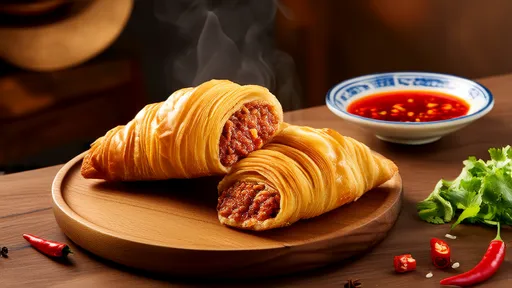
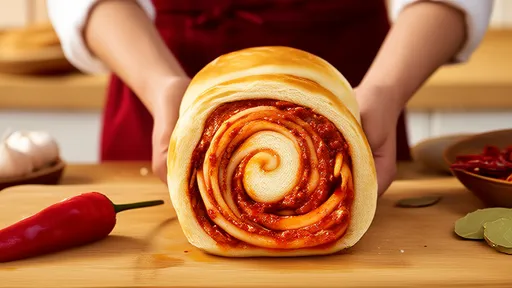
The culinary world thrives on innovation, and few things excite chefs and food enthusiasts more than the unexpected marriage of flavors and techniques. One such bold experiment gaining traction is the reinvention of the classic French croissant with fiery Sichuan influences. The result? A flaky, buttery pastry that packs a punch—combining the delicate layers of a traditional croissant with the numbing heat of Sichuan peppercorns and the savory depth of spicy beef.
At the heart of this creation lies the chili-infused butter block, a daring twist on the laminated dough's foundation. Instead of plain butter, bakers blend high-fat European butter with finely ground Sichuan peppercorns, chili flakes, and a hint of smoked paprika. This mixture isn't just folded into the dough—it becomes an integral flavor carrier, ensuring every bite delivers the signature málà (numbing-spicy) sensation. The peppercorns' citrusy undertones cut through the richness, while the slow-building heat lingers on the palate.
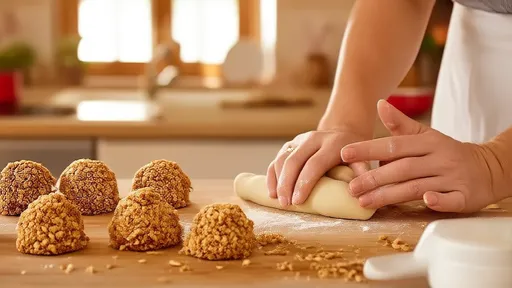
The filling takes inspiration from Sichuan's iconic spicy beef jerky (灯影牛肉), but reimagined for pastry compatibility. Thinly sliced beef shank is marinated in a blend of chili oil, fermented bean paste, and aromatic spices before being slow-cooked to tender perfection. After shredding, the meat is tossed with toasted sesame seeds and a drizzle of honey for balance. The key challenge? Moisture control—too much sauce risks soggy layers, so chefs employ a reduction technique to intensify flavors while maintaining the croissant's structural integrity.
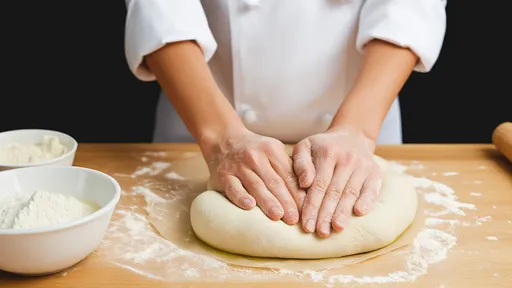
Lamination becomes an act of precision when working with these bold ingredients. The peppercorn butter behaves differently under rolling pins—its gritty texture requires adjusted folding techniques to prevent tearing. Bakers have developed a "double-rest" method: chilling the dough longer between folds to compensate for Sichuan pepper's slight moisture absorption. This extra patience rewards with audible shatter upon biting into the baked good, followed by the filling's umami explosion.
Early adopters report surprising harmony between the croissant's inherent sweetness and Sichuan heat. The pastry's airy pockets act as flavor chambers, releasing aromatic steam when broken open. Some avant-garde patisseries serve these with a side of black vinegar glaze for dipping—a nod to Chinese dumpling culture that adds acidic contrast to the richness.
This innovation speaks to a broader trend of cross-cultural pastry dialogues. Just as matcha and yuzu found their way into European desserts, Sichuan's bold flavors are now demanding space in the viennoiserie case. Food historians note parallels with Portugal's spicy piri-piri chicken pastry or Morocco's b'stilla, proving that heat and pastry have flirted across cuisines for centuries. What makes this iteration unique is its deliberate play on texture contrasts—the way crisp, caramelized outer layers give way to the slightly chewy, spice-coated beef within.
Purists might bristle at the idea, but sales figures tell another story. In Chengdu's experimental bakeries, these croissants sell out within hours, often paired with local flower tea to cool the palate. International chefs visiting Sichuan now routinely include these creations in their "must-taste" lists, with several Michelin-starred kitchens reportedly testing their own versions. The dish even sparked online debates about cultural appropriation versus homage, with most Chinese netizens applauding the respectful adaptation of regional flavors.
Technical hurdles remain—the peppercorn's slight bitterness can overwhelm if not balanced correctly, and achieving consistent heat levels across batches requires meticulous spice blending. Yet these challenges haven't deterred bakers from pushing boundaries. Recent variations include substituting beef with mushroom-and-tofu mixtures for vegetarians, or adding candied kumquat peel to enhance the citrusy notes.
As food globalization accelerates, such fusions will likely become more sophisticated. The Sichuan croissant doesn't just represent novelty—it demonstrates how understanding both Western techniques and Eastern flavor philosophies can yield something greater than the sum of its parts. For adventurous eaters, it offers a delicious lesson: that the most memorable culinary experiences often live where traditions intersect.
By /Jun 19, 2025
By /Jun 19, 2025
By /Jun 19, 2025

By /Jun 19, 2025
By /Jun 19, 2025

By /Jun 19, 2025
By /Jun 19, 2025

By /Jun 19, 2025
By /Jun 19, 2025
By /Jun 19, 2025
By /Jun 19, 2025

By /Jun 19, 2025
By /Jun 19, 2025
By /Jun 19, 2025
By /Jun 19, 2025
By /Jun 19, 2025
By /Jun 18, 2025
By /Jun 18, 2025
By /Jun 18, 2025
By /Jun 18, 2025
